
Piano Pop 2: Tiles Music Games
Rhythm Hero: Good Music GamesMusic
4.8162.00 Reviews
- Version
- 2.3.0
- Installs
- 5.00M
- Age Rating
- Everyone
Screenshots



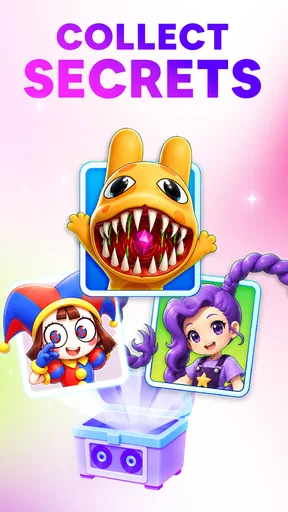
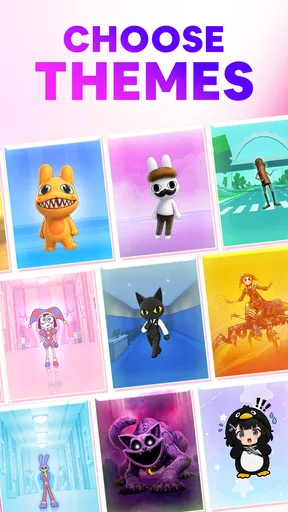
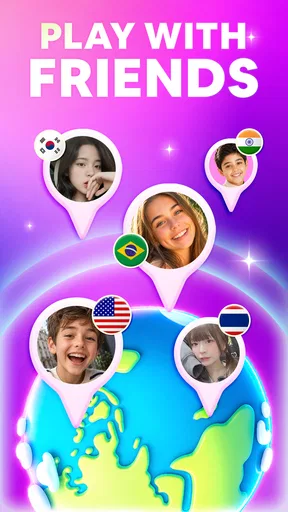


Our Review of Piano Pop 2: Tiles Music Games
 Analysis by Appyee
I spent time with Piano Pop 2: Tiles Music Games as a quick music game rather than treating it like a serious piano-learning tool, and that distinction matters from the first tap. The basic appeal is immediate: follow the moving tile pattern, keep the rhythm, and try to stay in control as the song pushes you forward. It is free, aimed at Everyone, and sits in the music-game category, so it makes sense for short breaks, casual play, and anyone who enjoys rhythm challenges without wanting a complicated setup.
What surprised me most was how much the experience depends on the player’s ability to read a busy screen, react quickly, and tolerate repeated attempts. The game can feel welcoming when I am focused and using a device comfortably, but it is less forgiving when my hands are tired, the screen is small, or background noise makes the musical cues harder to follow. My overall impression is positive, although I would recommend it with a clear understanding that its accessibility comes mainly from its simple premise, not from a broad set of documented adjustment tools.
How the game presents information and guides play
I look at the way the game communicates its rhythm challenge: its moving tiles make the next action visible, so I can focus on following the pattern instead of learning a complex control scheme. I’ll also consider how that visual guidance holds up when the pace feels demanding. The practical question is whether the presentation stays comfortable for different players and situations.
Readable at a glance, provided the screen works for you
The central interaction is easy to understand. I do not need to study a long rulebook before starting: the tiles provide the visual instruction, and my job is to respond in time. That simplicity is one of the strongest parts of the design. Someone who has played piano-tile games before will recognize the rhythm immediately, while a newcomer can usually understand the goal through a single short session.
The visual language is also more approachable than a traditional rhythm game filled with lanes, modifiers, score panels, and layered menus. Here, the action stays focused on the path in front of me. That helps when I want a game I can open and understand quickly, especially during a commute or a short wait. I am not required to remember a complex control scheme, and the connection between what I see and what I tap is direct.
That said, “simple” does not automatically mean easy to read for everyone. Fast movement can turn individual tiles into a dense stream, particularly when several actions arrive close together. Players with reduced visual acuity, difficulty tracking motion, or sensitivity to flashing and rapid animation may find that the screen becomes tiring before the game itself becomes enjoyable. I would start with short sessions and hold the phone at a comfortable distance rather than assuming the clean premise solves every visual challenge.
Navigation is friendly for casual sessions
In my experience, the game’s strongest navigational quality is that it gets out of the way. The premise does not require a large amount of menu knowledge, and the music-game format makes the next action obvious once a round begins. This is useful for younger players and for adults who want a low-commitment distraction instead of a game that demands planning before every attempt.
The same streamlined approach can be a limitation for players who need more control over presentation. A player may want larger visual targets, a slower practice mode, a less animated display, or a clearer distinction between active and inactive elements. I would not treat the straightforward interface as proof that every user will find it equally legible. It is clear in the ordinary sense, but clarity under pressure is a different test.
One practical tip helped me: I played with notifications silenced and the phone placed on a stable surface when I wanted better accuracy. Holding the device loosely while walking made missed taps feel like a control problem even when I understood the pattern. For a child or anyone who struggles with accidental touches, a case with a secure grip can make the experience less frustrating than changing the way they tap.
What the music contributes
The song-based structure gives the game more personality than a purely abstract tapping test. The store positioning points toward current, recognizable music and a pop-oriented experience, including K-pop energy, so the soundtrack is an important part of the attraction. When a track matches my mood, the repeated timing challenge feels more like participating in a song than simply clearing obstacles.
Music can also be a barrier. Some players rely more comfortably on visual information, while others may find strong beats distracting or may play in places where sound is inappropriate. I found that the game remains understandable when I concentrate on the tiles, but the musical layer is still part of the intended rhythm. Anyone who needs a completely quiet experience should consider whether the visual timing alone feels satisfying enough.
Motor, sensory, and everyday accessibility
For me, accessibility here is shaped by the combination of repeated touchscreen taps, moving visuals, and music—not by the simple premise alone. I’d approach a first session as a personal test of comfort, keeping it brief and noticing whether the screen, sound, and pace help me concentrate or become tiring. Those everyday factors can matter as much as familiarity with rhythm games.
Quick taps reward precision rather than strength
The controls are physically uncomplicated, but they are not automatically low-demand. The player repeatedly taps a touchscreen with accurate timing, and that can become difficult for people with tremors, limited finger control, joint pain, or slower reaction speed. A light touch is preferable to pressing hard, yet even gentle taps require the finger to arrive in the right place at the right moment.
I noticed a useful trade-off here: the game is easier to begin than a title that uses several buttons, swipes, or gestures, but it may be harder to master for someone who cannot reliably make rapid, isolated taps. A person with one-handed use may enjoy it if the active area stays reachable, while someone who needs a larger target or more time between actions may run into trouble quickly. The one-touch idea lowers the learning curve without removing the timing requirement.
For players with limited stamina, the best way to use it is in controlled bursts. I would not treat a long session as the default. A few rounds can provide the intended musical rush, while extended play may increase fatigue and make accuracy fall for reasons unrelated to skill. This is also relevant for younger children: the Everyone rating makes the game broadly suitable in age terms, but an adult may still want to observe whether the pace is enjoyable or overwhelming.
Visual motion and sound deserve personal testing
Rhythm games naturally create a stream of movement, and this one is built around that relationship between motion and timing. For me, the movement helps maintain concentration. For someone sensitive to animation, it may produce discomfort or make the screen difficult to follow. I would test a short round rather than judging from screenshots, because the challenge comes from the live combination of speed, contrast, music, and touch response.
Sound has a similar individual effect. Players who hear the beat clearly can use it as an extra timing reference, while players with hearing loss may depend almost entirely on the visual flow. That does not make the game impossible, but it changes the experience: the soundtrack becomes atmosphere instead of a dependable timing aid. If I were recommending it to a friend with different sensory needs, I would describe the visual pattern as the essential information and the music as helpful reinforcement rather than the only way to play.
A practical workaround is to use a quiet environment and keep the display free of glare. Reflections can make dark and light elements harder to distinguish, and glare becomes especially annoying when the tiles are moving quickly. I also found that playing while seated gave me better control than trying to react with one hand while carrying something. These are small changes, but they address real sources of missed taps.
Why the game works well in short, predictable situations
This is a good companion for a short break because a round does not require the kind of preparation associated with a larger mobile game. I can pick it up while waiting for a coffee, play a few attempts, and put it away without losing an elaborate story thread. The free entry point also makes it easy to try before deciding whether the rhythm style suits me.
Imagine using it on a bus while seated, with headphones and both hands available. That is close to an ideal situation: the player can see the screen, hear the beat, and focus on timing. Now compare that with playing while standing in a crowded train, under harsh reflections, with one hand holding a rail. The same simple controls become much less dependable. The game is accessible in concept, but the surrounding context has a major effect on success.
I would also avoid treating it as a background activity during a conversation or while supervising something that needs attention. Its timing demands are light compared with many action games, but they still require concentration. Someone looking for a game that can be played almost passively may prefer a puzzle with turn-based input or an idle format instead.
Where it sits beside other music games
Compared with a traditional piano-learning app, this is much more immediate and entertaining, but it does not replace structured lessons, note reading, or deliberate practice. The tile format gives me a satisfying sense of timing without teaching the physical technique of playing a piano. If my goal is musical education, I would choose a lesson-focused alternative; if my goal is a quick rhythm challenge, this format is more inviting.
Compared with more elaborate rhythm games, the appeal is its lower entry barrier. I do not need to learn multiple lanes or complicated combinations before I can enjoy a song. The trade-off is depth. Players who want extensive customization, deep progression systems, or a highly technical competitive environment may find the experience too narrow. Its strength is not being the most demanding rhythm game; it is making the first few minutes approachable.
The pop and K-pop direction also gives it a different mood from a classical piano-tile game. That can attract players who want contemporary energy rather than a neutral exercise. It may not suit someone who dislikes pop presentation or wants a broad genre library, but for the intended audience the musical identity makes repeated attempts feel less sterile.
Remaining barriers and who should choose it
I see the game as a better fit for players who enjoy quick, focused pop-rhythm challenges than for anyone seeking slow play or piano instruction. Before choosing it, I would weigh the value of its approachable tile interaction against the need for precise taps and rapid visual tracking. That distinction helps set realistic expectations for who is likely to enjoy it most.
The biggest weakness is the lack of visible flexibility
My main reservation is not the core control; it is the limited sense that the experience has been designed around different abilities and environments. A game can be easy to understand and still leave important players behind if its pace, visual density, and touch demands cannot be adjusted. For someone who needs slower timing, larger targets, reduced motion, or stronger visual separation, the standard experience may remain uncomfortable.
This matters because failure in a rhythm game is often ambiguous. I may miss because I mistimed the tap, because my finger landed slightly off target, because the phone registered movement differently than expected, or because I could not visually separate the next tile quickly enough. When there are few ways to adapt the presentation, it is harder to tell whether I am improving or simply fighting the interface.
Another limitation is the dependence on the device itself. Screen size, touch responsiveness, brightness, audio output, and the player’s grip all change the result. A larger phone can make the path easier to inspect but may be harder to hold. A small phone is portable but can compress the active area. I would not make a purchase decision based only on the game’s rating; I would consider whether the device is comfortable for repeated accurate taps.
Who will probably enjoy it most
I would recommend it to casual players who enjoy pop music, quick reactions, and the satisfaction of retrying a section until the timing feels right. It is especially suitable for someone who wants a free music game that can be understood without a long tutorial. The broad Everyone age rating also makes it a reasonable candidate for family devices, provided the actual player is comfortable with fast visual movement and repeated touchscreen input.
It is also a nice choice for a friend who has never tried rhythm games and feels intimidated by complicated controls. I could hand over the phone, explain the tile idea in a sentence, and let the person discover the timing naturally. That immediate start is more valuable than it sounds: many music games lose newcomers by presenting too many systems before the first enjoyable moment.
I would be more cautious recommending it to someone looking for calm, slow-paced play, formal piano training, or an experience built around accessibility customization. Players with significant difficulty using a touchscreen may need a game with more forgiving input. Likewise, anyone who dislikes repeating failed attempts may find the central rhythm loop demanding rather than relaxing.
What the release details tell me about trying it now
The game was released on July 16, 2025, and the current version is 2.3.0. It runs on Android 7.0 or later, which gives it a relatively broad technical starting point for compatible Android users. I appreciate that the entry cost is free because the only sensible way to judge the visual pace and touch response is to play it on the device I actually intend to use.
Its audience is already substantial: it has passed five million installs, with an average rating of 4.8 from around thirty-one thousand ratings. Those figures suggest that the basic formula connects with many players, although they do not tell me whether the game will suit a person with particular sensory or motor needs. I would read the popularity as evidence of a strong casual appeal, not as a guarantee of universal comfort.
The developer, Rhythm Hero: Good Music Games, has positioned it clearly around music and fast tile play rather than pretending it is a full instrument simulator. That clarity helps set expectations. I know I am opening a game for timing and entertainment, not a replacement for a keyboard, a tutor, or a comprehensive music course.
Small habits that make the experience fairer
I got better results by choosing a stable posture before starting instead of blaming every missed note on reaction speed. Resting the phone against a surface, keeping the tapping hand relaxed, and avoiding glare made the visual stream easier to follow. These habits are particularly useful for players who experience hand fatigue or need more time to reposition between rounds.
I also recommend separating “practice” from “score chasing.” During a first attempt, I focus on recognizing the movement and learning the song’s rhythm. Only afterward do I try to improve my result. This reduces the pressure to react perfectly immediately and makes the game more welcoming for players who need a gradual adjustment period. It does not change the pace, but it changes how demanding the session feels.
Finally, I would use headphones only when they improve concentration and are safe for the setting. In a quiet room they can make the rhythm more distinct; outdoors or during travel, they may reduce awareness of what is happening around me. The game fits many contexts, but responsible use still matters more than squeezing in another attempt.
My inclusive verdict after playing
Piano Pop 2: Tiles Music Games succeeds because it removes the intimidating parts of rhythm games. The premise is instantly recognizable, the controls are limited to familiar touchscreen actions, and the pop-focused musical mood gives short sessions a clear identity. I enjoyed it most when I wanted a burst of concentration rather than a long adventure, and I can see why its strong rating and millions of installs reflect broad casual interest.
Its inclusive qualities are real but modest. The simple interaction helps newcomers, children, and players who prefer uncomplicated menus, yet the game still asks for rapid visual tracking, precise taps, and tolerance for motion and sound. Those requirements can exclude people who need slower pacing, larger targets, reduced animation, or alternative input. I would describe it as approachable, not universally adaptable.
My final recommendation is straightforward: try it if you want a free, energetic music game that fits into spare minutes and you are comfortable with fast touchscreen timing. Play seated, reduce glare, and treat early rounds as orientation rather than a test of ability. Choose a different kind of app if your priority is piano instruction, relaxed turn-based play, or extensive accessibility controls. For the right player and the right setting, this is a lively little rhythm challenge; for everyone else, its narrow interaction style is the reason to look elsewhere.
Verdict
Strengths of Piano Pop 2: Tiles Music Games
- Large selection of popular songs and piano melodies
- Simple one-touch controls are easy for beginners to learn
- Fast-paced levels provide an engaging reflex challenge
- Bright visuals and sound effects make sessions entertaining
- Works well for short gaming sessions on the go
Limitations of Piano Pop 2: Tiles Music Games
- Some songs and features may require in-app purchases
- Difficulty can increase sharply in later levels
- Ads may interrupt gameplay between songs
- Requires a stable connection for certain content
- Repeated tapping can become monotonous over time
Similar Picks in This Category
View All
Tiles Hop Music & Ball Game
AMANOTES PTE. LTD.4.3

Magic Tiles 3™ - Piano Game
AMANOTES PTE. LTD.4.6

Real Piano
Bilkon3.7

Piano Game: Classic Music Song
Dream Tiles Piano Game Studio4.0

Smash Colors: Music Ball Rush
BADSNOWBALL HONGKONG LIMITED4.2

Piano Music Go-EDM Piano Games
Joy Journey Music Games4.5
Frequently Asked Questions
What is Piano Pop 2: Tiles Music Games?
Piano Pop 2: Tiles Music Games is a rhythm game in which you tap piano-style tiles in time with music. The main objective is to follow the song’s pattern accurately and avoid missing notes. It combines quick reactions, familiar musical tracks, score-based challenges, and progressively faster gameplay, making it suitable for short sessions as well as longer attempts to improve your personal records.
How do you play Piano Pop 2: Tiles Music Games?
Gameplay is based on tapping the correct black or colored tiles as they move across the screen. You need to keep your timing accurate while the notes become faster and more demanding. Missing a tile can interrupt your run or reduce your performance, so concentration is essential. The controls are simple, but mastering difficult songs requires practice and consistent rhythm.
Can Piano Pop 2: Tiles Music Games be played offline?
Some parts of Piano Pop 2 may be available without a continuous internet connection, especially previously loaded songs or basic gameplay modes. However, online access may still be required for downloading music, displaying advertisements, synchronizing progress, receiving updates, or accessing certain events and features. Availability can vary by version and device, so checking the app’s current store description is recommended.
Is Piano Pop 2: Tiles Music Games free to download?
Piano Pop 2: Tiles Music Games can generally be downloaded at no initial cost, allowing users to try the core gameplay before making any purchase. Like many free mobile games, it may include advertising, optional in-app purchases, or paid items that affect convenience rather than being necessary to understand the basic experience. Review the store listing for current pricing and purchase details.
Is Piano Pop 2: Tiles Music Games suitable for children?
The game is easy to understand because it relies on tapping tiles and following music, which can make it appealing to younger players. Nevertheless, parents should check the age rating, advertising content, privacy information, and available in-app purchases before installation. Fast songs may also become challenging for children, while repeated play can encourage longer screen time than intended.
Play our best games!


